Singing Mechanical Birds
caged automata · 19th–20th centuries
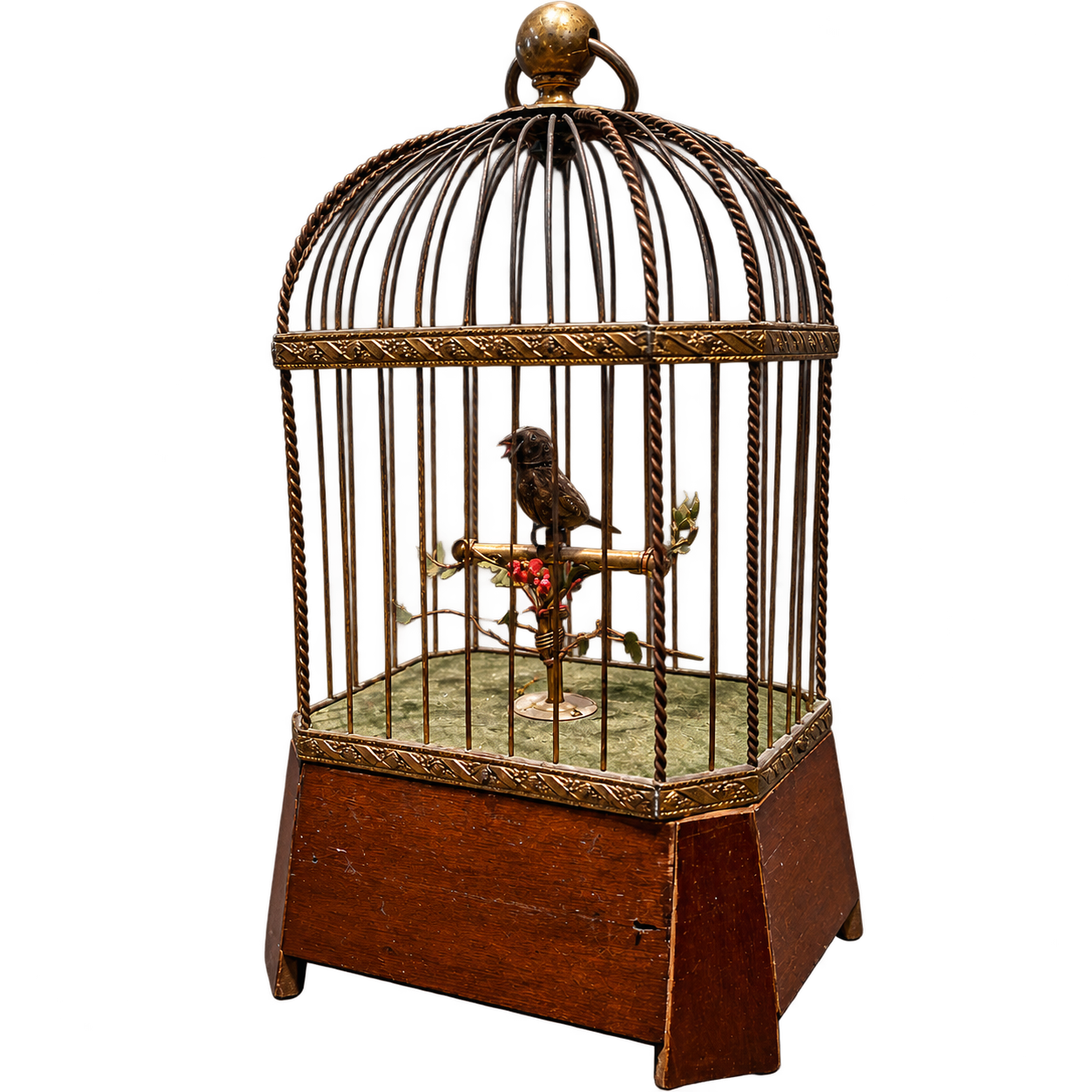
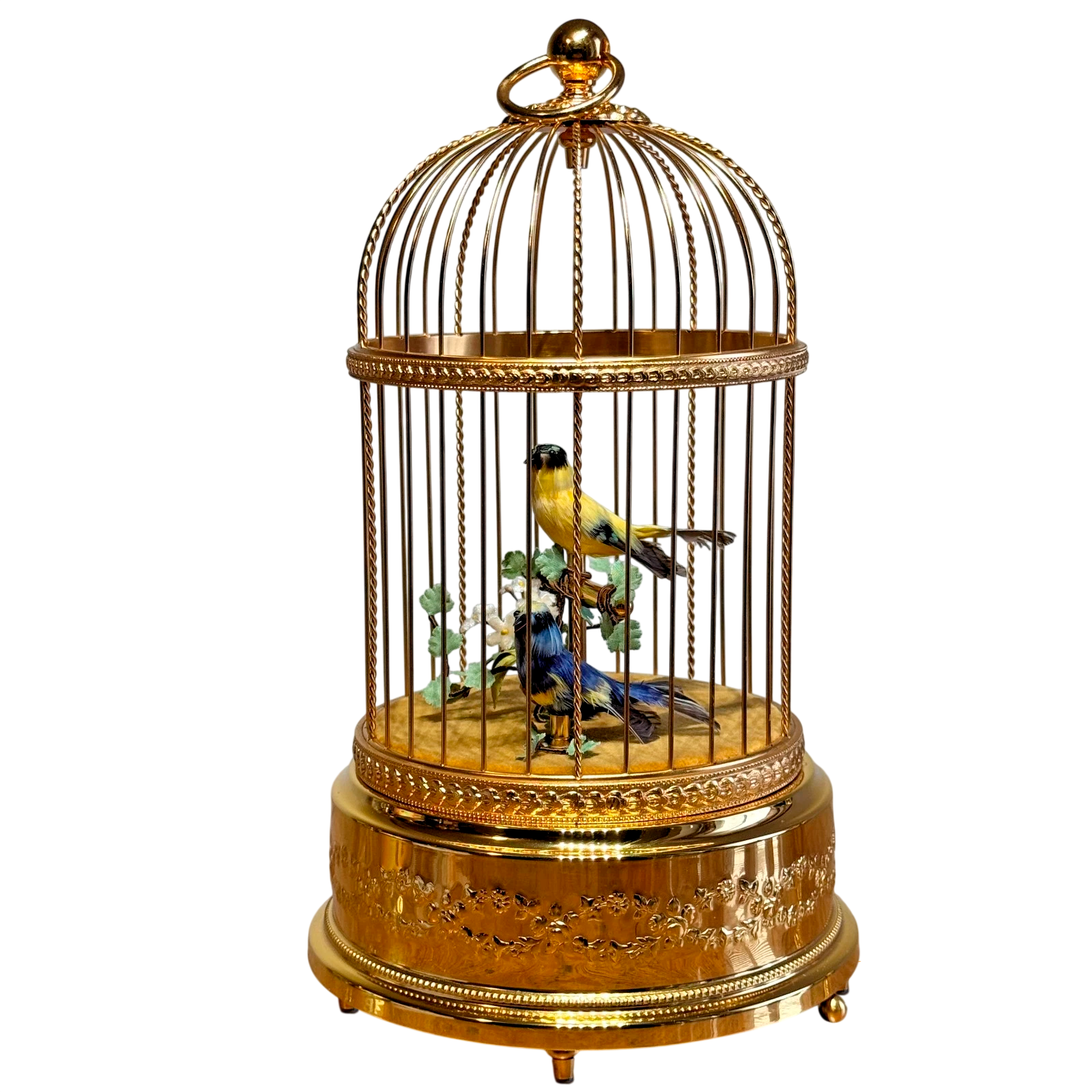
This is a collection of automatons — mechanical songbirds of the 19th–20th centuries. Inside every cage hides a tiny mechanism: a spring, a bellows and a piston whistle. Wind the key — and the bird sings, turns its head and flaps its wings as if alive.
Every automaton in the collection has been fully restored in our workshop: each movement was taken apart, cleaned and tuned. All the birds sing and are in full working order.
We have been collecting songbirds for over thirty years: buying at European auctions, acquiring them from private families, finding them at flea markets. Each bird arrives “as is” — and leaves the workshop singing. That is why we know everything about these mechanisms: from the shape of a rivet to the mood of the maker who assembled it.
How it works
- I
Wound by a keyA few turns of the key wind the spring — enough for several verses of the song.
- II
Song by bellowsAir is pushed through a piston whistle: the bird whistles, trills and draws out its phrases.
- III
Motion by camsCams and levers turn the head, open the beak, make the wings and tail tremble.