 Not for sale
🔍 tap the photo to inspect
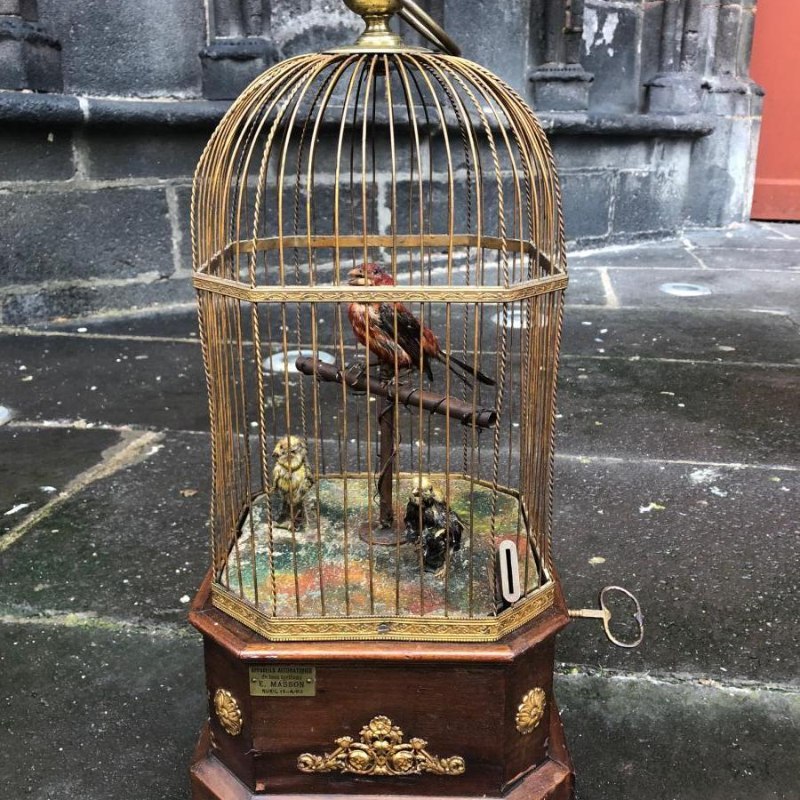
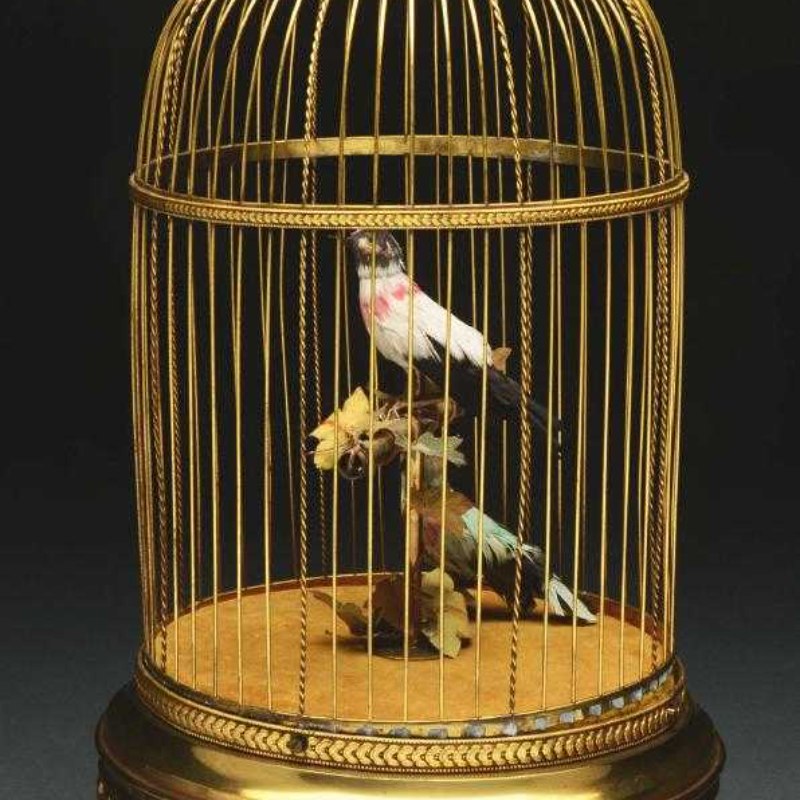
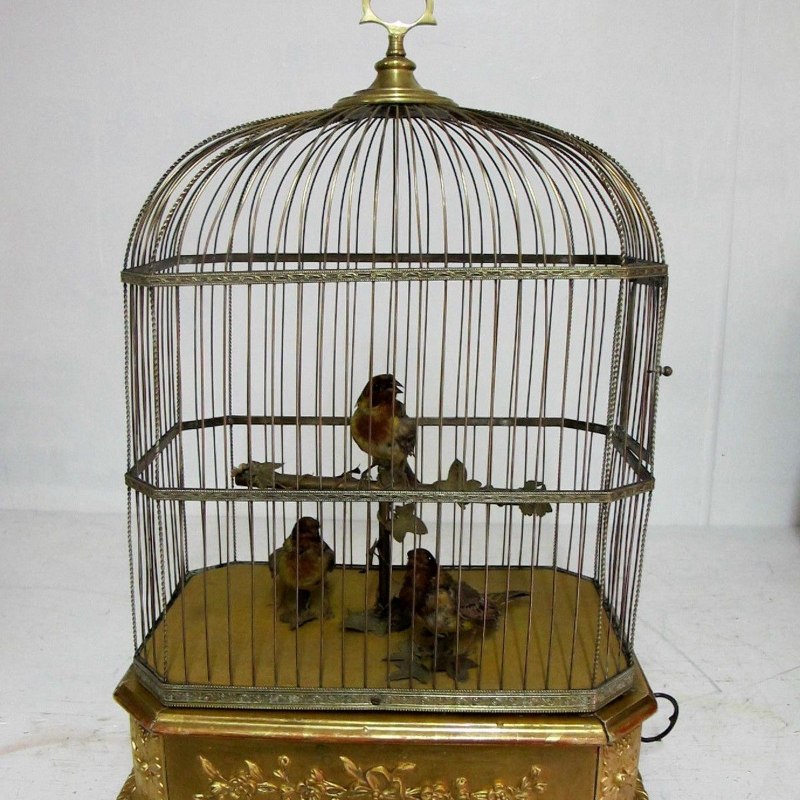
Triple automaton “Singing Birds” in a dome-shaped cageNot for sale
This bird is not for sale.
Description
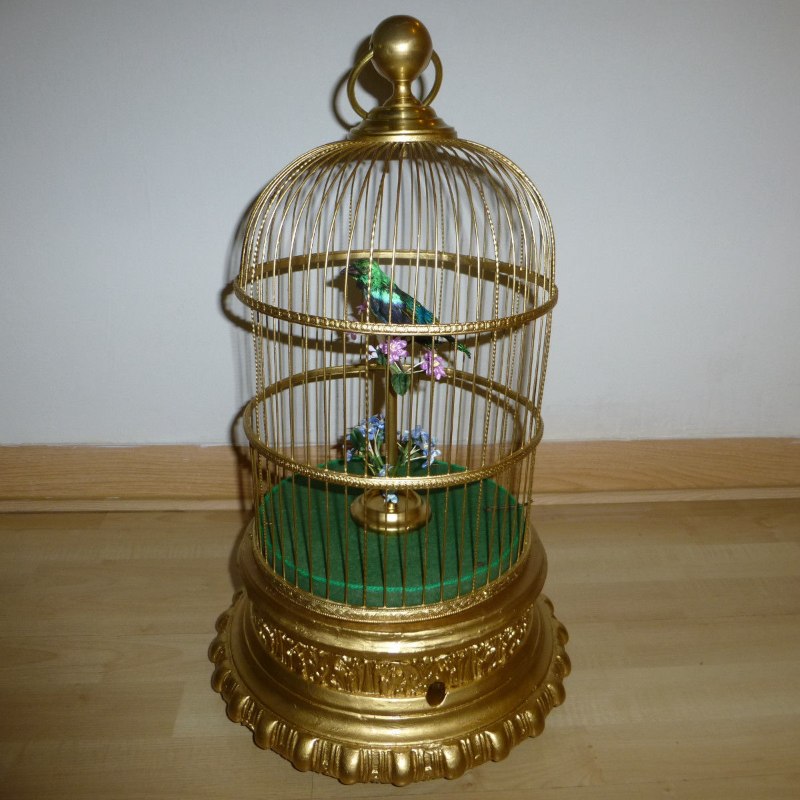
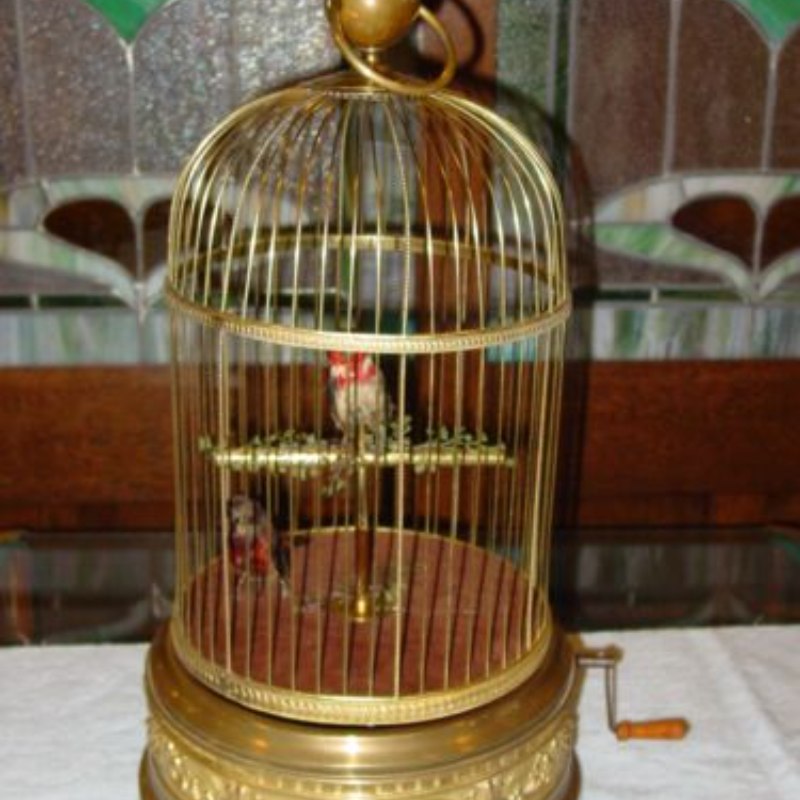
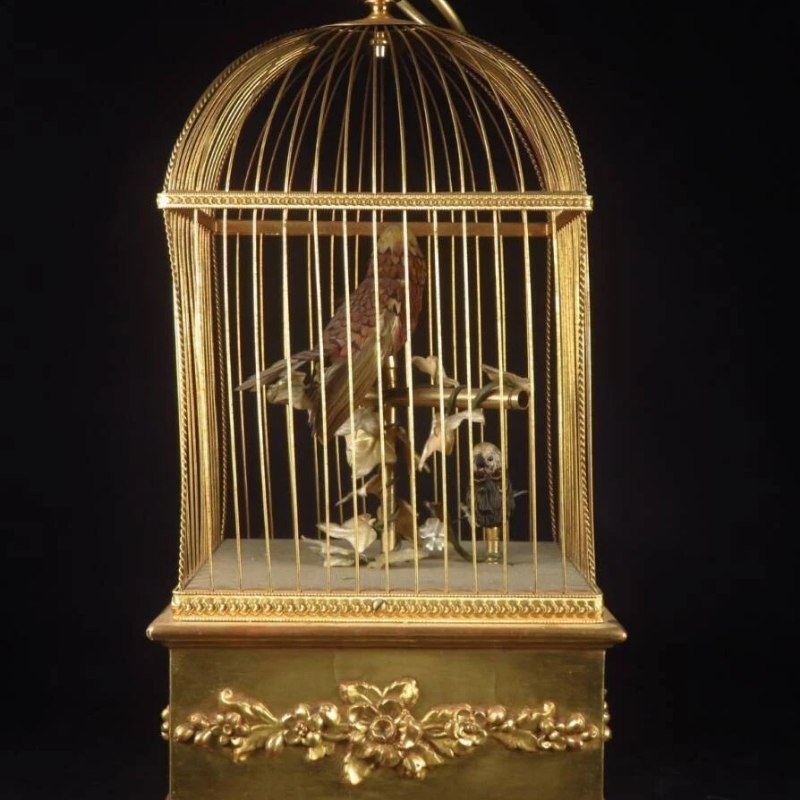
The automaton is made in the form of a figured brass cage of a dome shape, mounted on a faceted pedestal made of gilded brass. The cage is assembled from thin vertical rods converging into an elegant vaulted dome, and is divided by decorative belts with chased patterns; The finish is a chiseled handle in the shape of a crown. The octagonal pedestal is decorated with a chased garland of roses and foliage and an ornamental border around the perimeter.
Inside the cage there are three mechanical birds with plumage made of natural feathers in ocher-brown and reddish tones, imitating finches: one is mounted on a branch with metal leaves, the other two are on the bottom of the cage, covered with golden-colored fabric. When the mechanism is started (the controls are located on the side), the birds imitate singing: they turn, flap their wings and tails, open their beaks; The sound is produced by a cam-controlled bellows mechanism hidden in the pedestal.
Marking
The base retains the manufacturer's original oval paper label: “FABRIQUE DE PIÈCES MÉCANIQUES. AUTOMATES. FOURNIER. Faub.g St Denis, 12 & Boul.d St Denis, 18, PARIS (Passage du Bois de Boulogne). Vues Marines sous Cylindres. AQUARIUMS MÉCANIQUES. Scenes de Singes. TABLEAUX d'HORLOGE et de MUSIQUE, DANSEURS de CORDE. OISEAUX CHANTEURS" (“Factory of mechanical products. Automata. Fournier. Faubourg Saint-Denis, 12 and Boulevard Saint-Denis, 18, Paris. Marine views in top hats. Mechanical aquariums. Scenes with monkeys. Clockwork and musical paintings, rope dancers. Singing birds”), with vignettes depicting a cage with a bird and a mechanical aquarium.
Historical background
The Fournier workshop was part of a circle of Parisian firms in the last third of the 19th century that specialized in “mechanical wonders” - singing birds, automatic aquariums, stages with monkeys and musical tableau. Triple automata were produced significantly less often than single ones and belong to the most sought-after categories of collectible automatons. It is noteworthy that the left vignette of the label reproduces a cell similar to the example shown.
Condition
Item retains original coating and label. Traces of use are noted: natural patina of brass, local abrasions of gilding, wear of the plumage and base fabric.